Nidus Raises $30 Million to Put AI Robots in America’s Defense Factories
A robotics company called Nidus has raised $30 million to put smart robots inside U.S. factories that build parts for defense equipment.
What happened
Nidus builds artificial intelligence, or AI, that lets robots do physical work in factories. This is sometimes called "embodied AI," which just means AI that can control a robot's body to do real tasks, not just answer questions on a screen.
The company just raised $30 million. The money came from Kleiner Perkins and Costanoa, two investment firms, along with Ludlow Ventures, SF1, Absolute Partners, Tau, and some individual backers. Those backers include Chris Power, who founded a company called Hadrian, Adrian Aoun, who co-founded Dulo, Foundational Industries, and Seneca, and Nikhil Goel, a chief commercial officer at Archer.
Nidus plans to use the cash to put its AI robots into more U.S. defense factories. Right now the company is focused on one task: building wire harnesses. These are bundles of wires that connect the electrical parts inside planes, missiles, and military vehicles. Making them by hand takes skill and time, and it is hard to automate because each harness is often built in small, specialized batches.
Why this matters
For years, a lot of U.S. manufacturing moved overseas. That has left America short on the people and factories needed to build defense equipment fast. Nidus says the fix is not just building new factories. Instead, the company wants to help the factories we already have make more with the same space and workers, by adding AI-powered robots that can handle tricky, hands-on jobs.
Nidus also says it builds its systems to meet the tight security rules that defense factories need. It lets its customers keep control over the manufacturing know-how created while using its tools, which matters a lot when a factory is handling sensitive military information.
What this means for you
You may not work in a factory, but this kind of news still matters if you care about jobs, national security, or where your tax dollars go. Here is a simple breakdown of what is happening and why it is getting attention:
- The U.S. wants to build more defense equipment at home instead of relying on parts from overseas.
- Companies like Nidus are betting that smarter robots, not just more factories or more workers, are the fastest way to get there.
- Big investors are putting real money behind that bet, which signals they think this kind of automation will keep growing.
The company's early results
Nidus says it has already made more than $1 million in revenue in its first four months of business. That is a fast start for a young company, and it suggests factories are already lining up to use its technology.
Justin Sealy, the co-founder and CEO of Nidus, said he grew up in rural South Carolina and watched offshoring hurt American industry. He said the U.S. can't simply out-work or out-build its competitors anymore, so it needs to use AI to get more out of the factories it already has. He also said Nidus only works with American institutions tied to national security.
Investors backed up that view. Aatish Nayak, a partner at Kleiner Perkins, said the companies that win in this space will be the ones that actually get their AI working inside real, tightly controlled environments, and said Nidus has done exactly that. Greg Sands, founder of Costanoa, said the U.S. cannot fix its industrial capacity by building new factories alone, and said his firm backed Nidus early because the team understood the real problems in American manufacturing firsthand.
This site exists to explain stories like this one in plain language, for people who are busy but want to actually understand what is going on, without needing a dictionary to get through it.
Next step
If you want to follow where this trend goes next, keep an eye on whether Nidus expands past wire harnesses into other factory tasks, since that would be a sign this technology is spreading fast across U.S. defense manufacturing.
Nidus’s approach shows how ai tools defense manufacturers are using robotics to speed up production of critical military hardware.
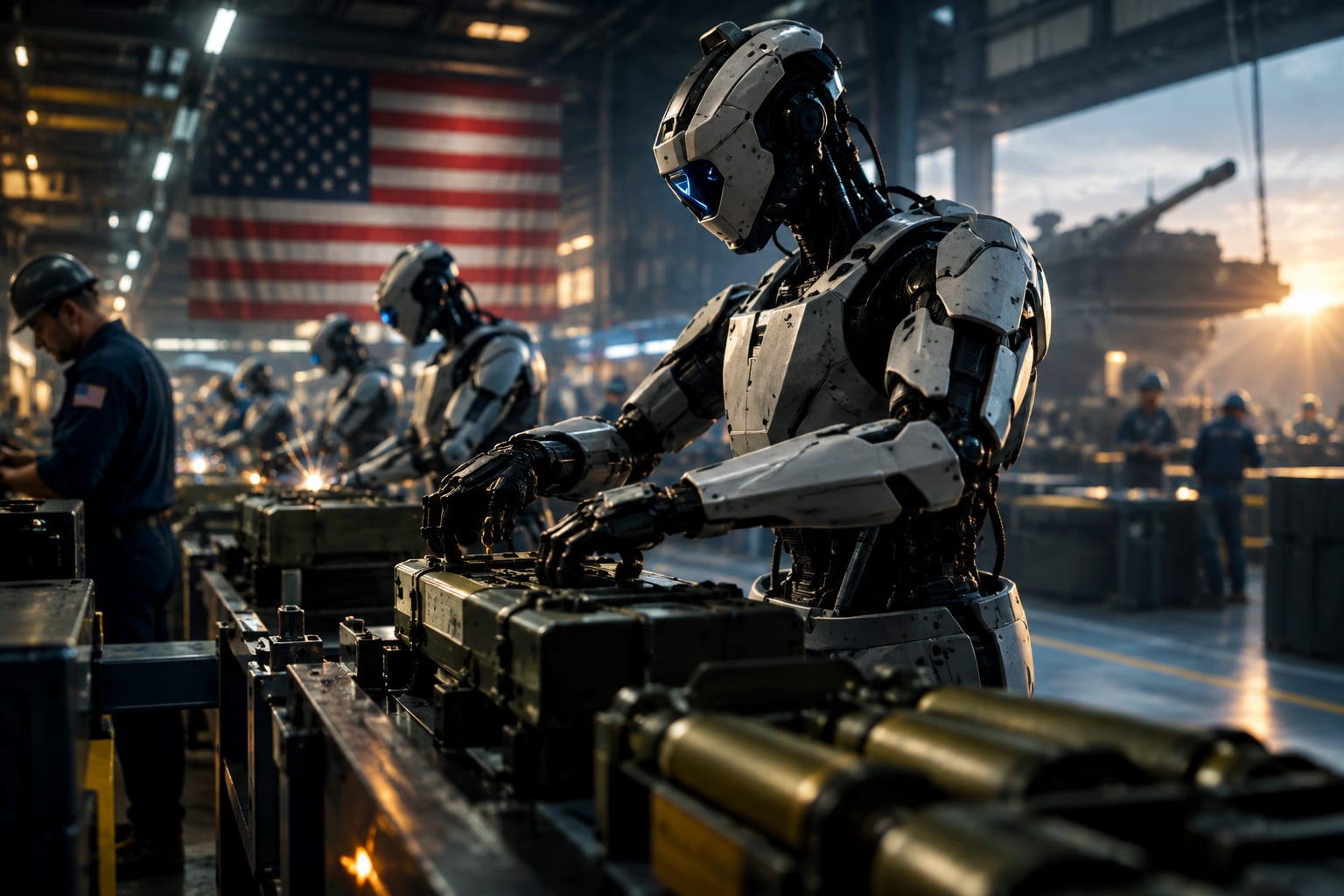
Pairing this story with a clear ai image for posts showing a robotic arm on a factory floor helps readers visualize how automation is reshaping defense manufacturing.
Source: Pulse 2.0