Texas A&M Opens Robot-Run Lab to Build New Metals in Days, Not Months
Texas A&M University is opening a new lab called the Aggie AI Foundry, where robots and artificial intelligence will design and test new metal mixes without needing a person to run each step.
What happened
Metal science, called metallurgy, goes back thousands of years. People used it to make tools in the Iron Age and later to build skyscrapers. Texas A&M wants to bring that old craft into the modern age.
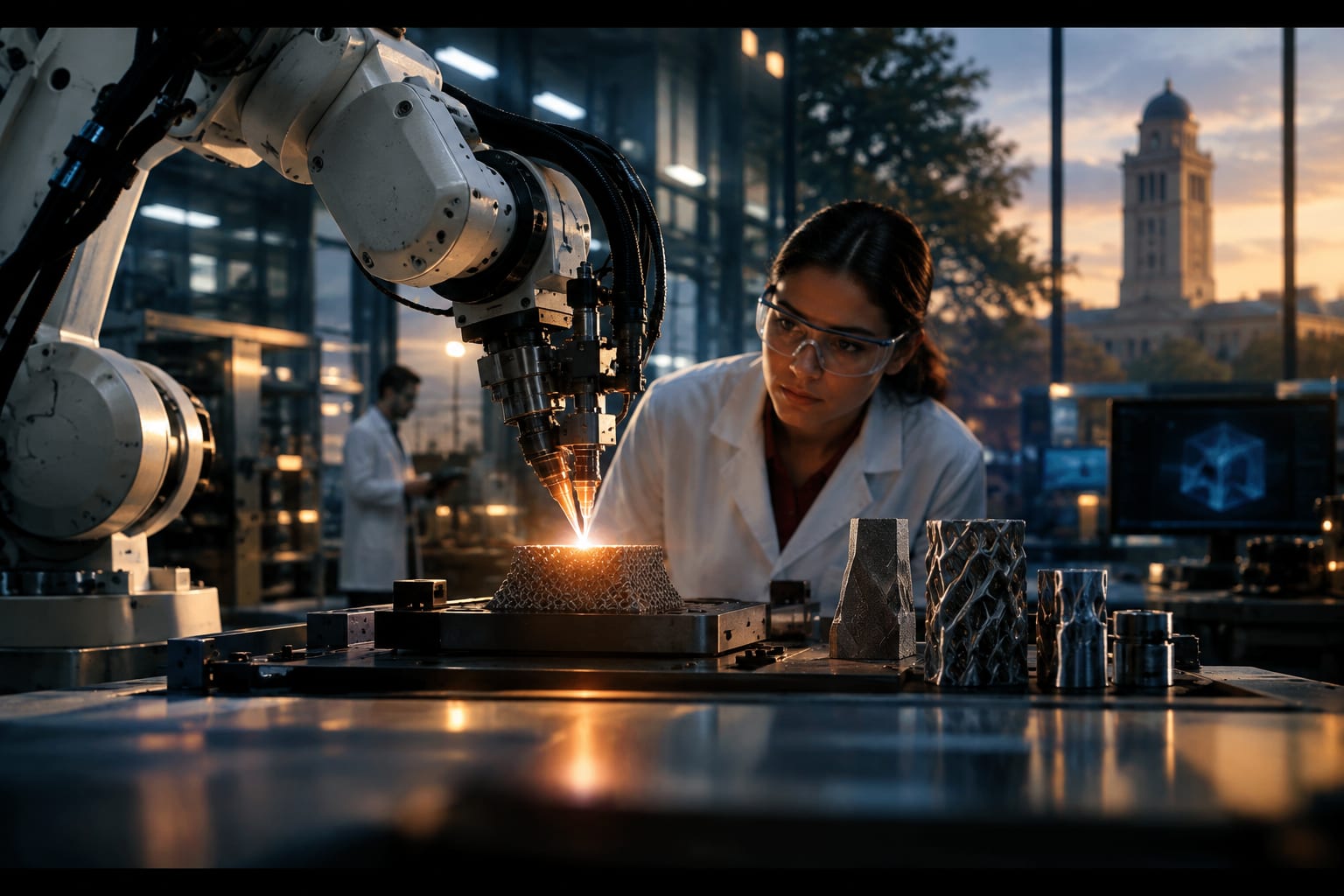
The university says two professors, Raymundo Arróyave and Ibrahim Karaman, built the new lab. It uses a fully automated system that lets artificial intelligence (AI, meaning computer programs that can make decisions or find patterns on their own) and robots create metal alloys. An alloy is just a mix of two or more metals, like how steel is a mix of iron and carbon. The school says this lab can cut the time it takes to make a new alloy from months down to just days.
Robotic arms will mix, melt, and test the materials along an assembly line, much like a factory line. The AI behind the system could test as many as a trillion different combinations of elements from the periodic table, the chart scientists use to list all known elements.
Arróyave told Houston Public Media the team has a big goal. He said they want to open up access to this kind of research, speed up how fast new materials get made, and free up students and researchers to use their creativity instead of doing repetitive lab work.
The project has money behind it from the WoodNext Foundation. That group was started by Roku CEO Anthony Wood and his wife Rusan, who are both Texas A&M graduates. The foundation did not respond when asked for comment.
Not everyone is cheering. Arróyave said some students and researchers worry that using robots and AI instead of people could water down the skill and tradition of metallurgy as a field.
Arróyave pushed back on that idea with a story from his own time as a graduate student at MIT. He said he used to polish metal samples by hand, and his fingers would get caught in the polishing wheel and end up bloody. He said that part of the job was not fun and did not teach him much, and he wishes he had a machine to do it back then.
He compared the automated lab to a fast pass at a theme park, or to flying straight to the Grand Canyon instead of driving there. The point, he said, is to skip the boring, repetitive steps and get to the exciting discoveries faster. He was clear that this does not remove the careful, detailed work that still has to happen once a promising new material is found.
Even with robots doing the physical work, people are not being pushed out. Arróyave called humans "fundamental" to the process. He said students will now focus more on higher-level thinking and research instead of spending hours on manual lab tasks. He added that this means training a new kind of scientist, one who has to learn more than earlier generations did.
What this means for you
You do not need to be a scientist to care about this. New metal alloys can lead to stronger buildings, better batteries, lighter cars, and safer airplane parts. If a lab can find these new metals in days instead of months, that progress could reach your daily life faster than you think.
This site exists so busy people like you can understand big science and tech news without needing a dictionary. Here is a simple way to think about what is happening in College Station:
- Robots now handle the slow, repetitive lab work, like mixing and testing metals.
- AI checks huge numbers of possible metal combinations at once, something humans could never do by hand.
- Human scientists and students shift their time to bigger questions, like what to build with these new materials.
As a next step, keep an eye on updates from Texas A&M about what the Aggie AI Foundry actually discovers once it starts running. The real story will be in what new materials come out of it.
Source: Houston Public Media