Artemis II Lunar Mission Faces Delay Due to SLS Rocket Anomaly
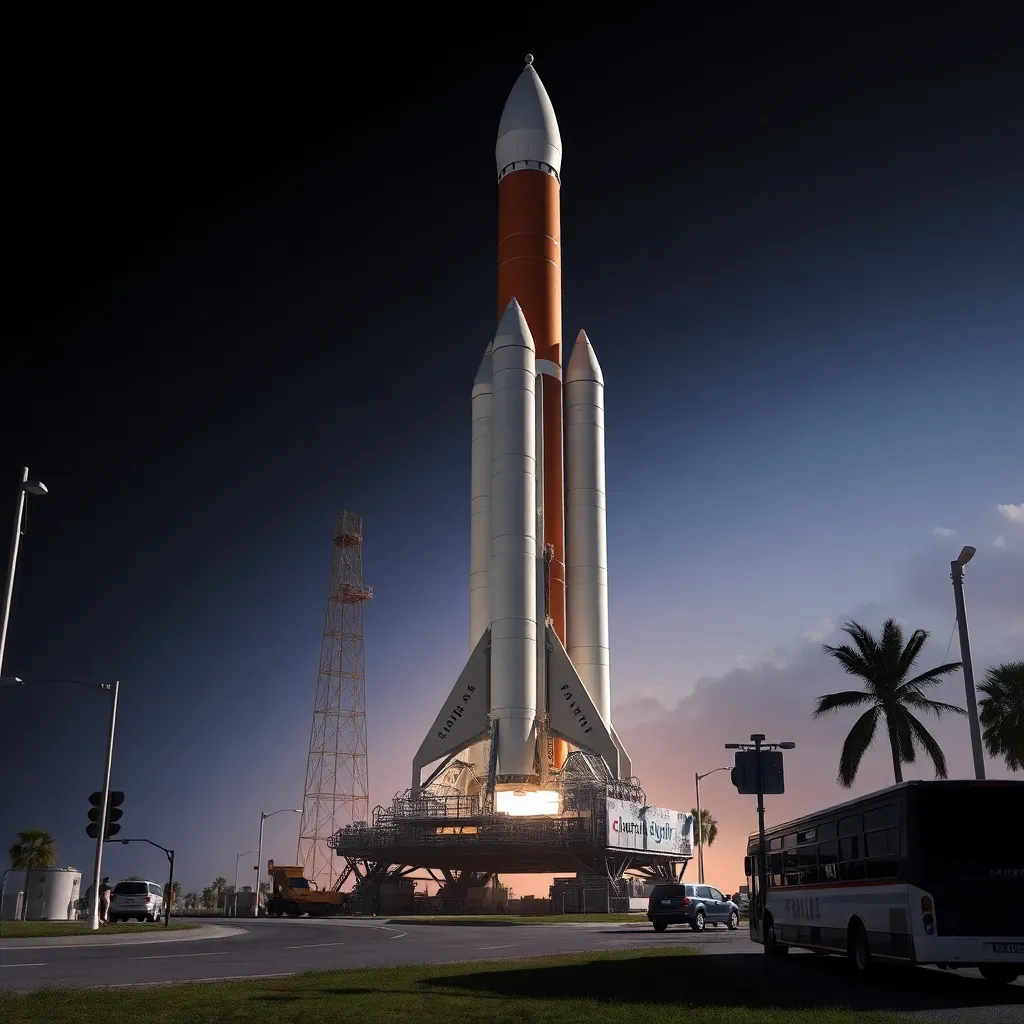
The highly anticipated Artemis II lunar mission, a critical step in NASA’s ambitious program to return humans to the Moon, has encountered another delay, with its launch now targeted for April instead of the previously planned March 6. This postponement stems from a detected failure in the helium flow system of the powerful Space Launch System (SLS) rocket, the cornerstone technology propelling the mission.
Artemis II represents the first crewed flight test of the integrated SLS rocket and Orion spacecraft, designed to carry astronauts around the Moon and back. The SLS, a super heavy-lift launch vehicle, is engineered to provide unprecedented power for deep-space exploration, capable of launching the Orion capsule along with significant payloads. Key features include its massive core stage powered by four RS-25 engines, augmented by solid rocket boosters, generating millions of pounds of thrust at liftoff. The Orion spacecraft, built for human deep-space travel, incorporates advanced life support systems, sophisticated navigation, communication capabilities, and a robust heat shield essential for re-entry from lunar velocities.
The primary benefit of the Artemis program, spearheaded by missions like Artemis II, is to establish a long-term human presence on and around the Moon, serving as a proving ground for future human missions to Mars. It aims to foster scientific discovery, develop new technologies, and inspire a global generation through space exploration. The target audience extends beyond NASA to include international partners such as the European Space Agency (ESA), Canadian Space Agency (CSA), and Japanese Aerospace Exploration Agency (JAXA), as well as the scientific community and the general public, who are captivated by the prospect of human lunar return. Technical specifications like the SLS’s impressive thrust-to-weight ratio and Orion’s capacity to sustain a crew of four for extended missions underscore the engineering marvels involved in this endeavor, despite the current technical hurdle delaying its next critical phase.
NASA is exploring how ai automation artemis systems could help diagnose and prevent similar rocket anomalies in future lunar missions.
As NASA investigates the technical issues, space agencies are exploring how ChatGPT automation Artemis mission planning could streamline future lunar program operations.
(Source: https://www.wired.com/story/nasa-delays-artemis-ii-launch-again/)