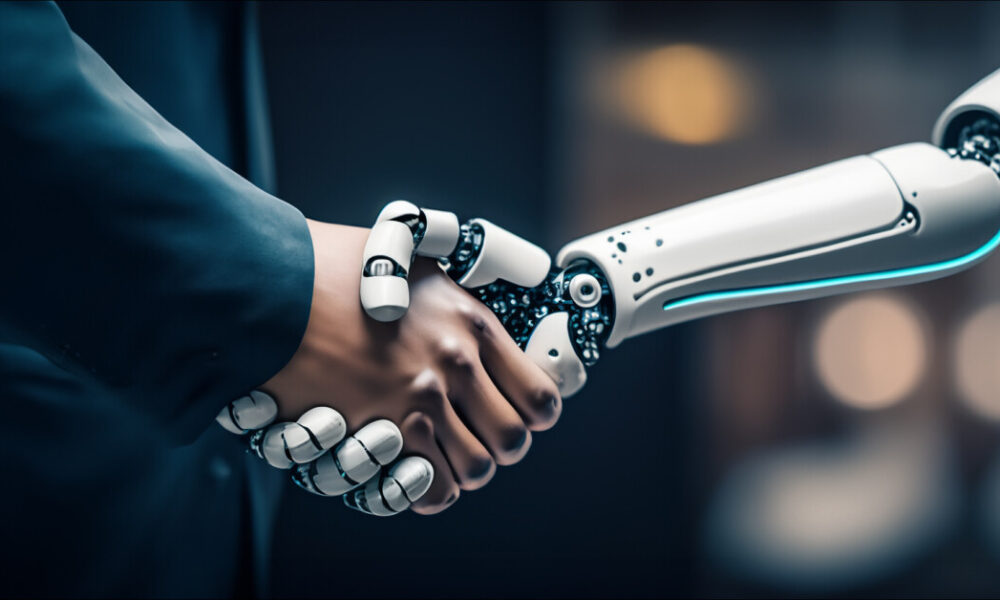
Politeness to AI: Does it Really Improve Responses?
A recent study challenges the popular belief that being polite to AI leads to better responses. Researchers from George Washington University developed a mathematical framework to predict when an AI‘s output will ‘collapse’ into incoherent or misleading information. Their model suggests that politeness in prompts doesn’t significantly delay or prevent this collapse. The study focuses on a simplified model of a single attention head, showing that polite language acts as ‘statistical noise,’ having little impact on the AI‘s internal decision-making process. The tipping point, where the AI shifts to bad outputs, is determined by the alignment of meaningful tokens, not polite phrases. While the model is simplified, the researchers suggest the theory could apply to more complex models, potentially with amplified effects. This contradicts the common practice of adding ‘please’ and ‘thank you’ to AI prompts, and challenges the assumption behind instruction tuning, which assumes prompt phrasing affects AI interpretation. However, the study’s conclusions are limited by its simplified model and require further testing on more complex AI architectures. The findings raise questions about anthropomorphizing AI and the potential for politeness to lose its social meaning when applied to AI systems. Current public opinion is divided, with a significant portion of users still believing that politeness improves AI interactions, despite this counter-intuitive research.
The intersection of ai automation politeness raises fascinating questions about whether courteous language actually enhances machine learning model performance and user satisfaction.
Many users wonder whether incorporating chatgpt automation politeness strategies actually leads to more helpful and accurate AI-generated responses.
(Source: https://www.unite.ai/ai-doesnt-necessarily-give-better-answers-if-youre-polite/)