US Public Workers Are Pushing Back Against AI, and Some Are Winning
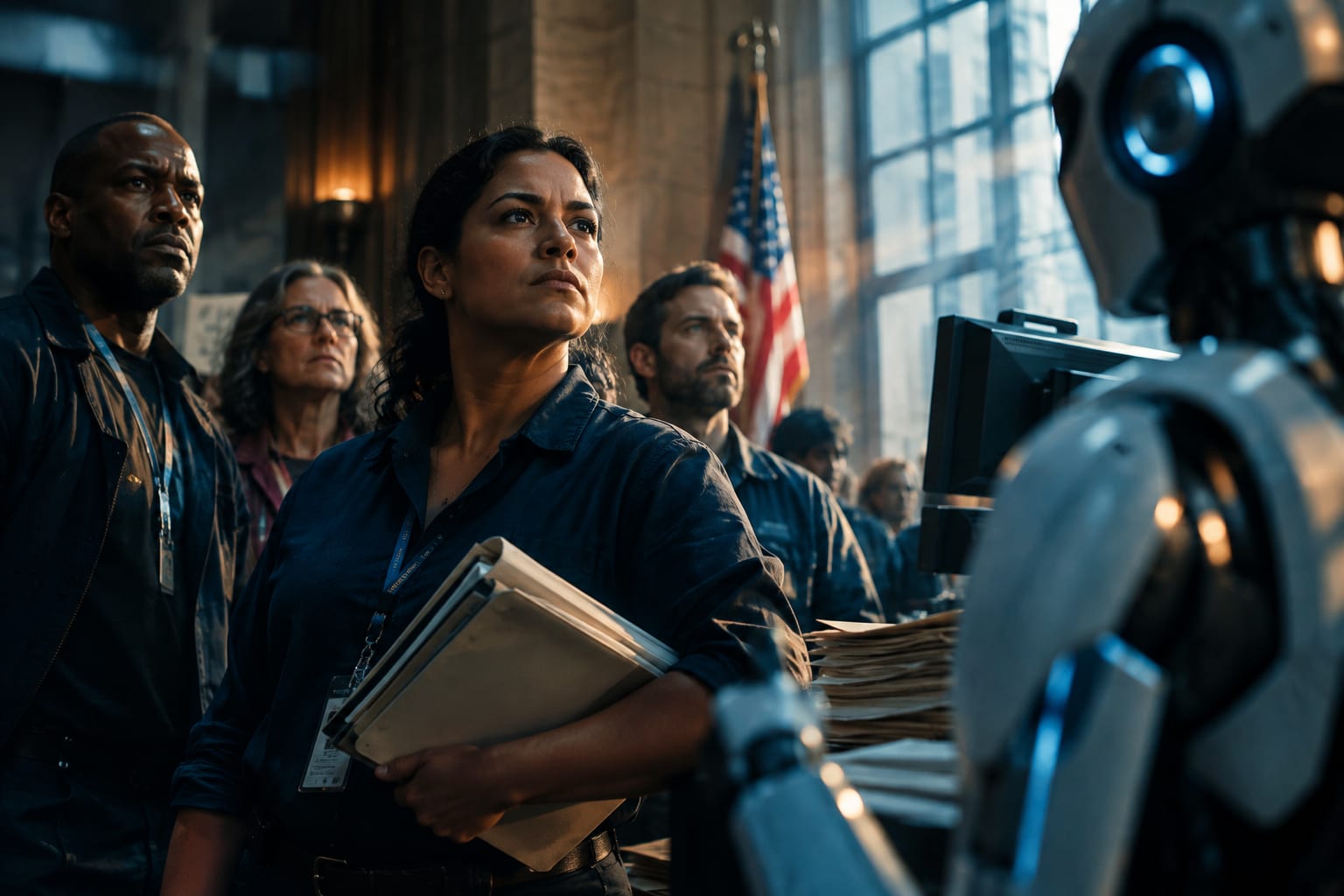
Public workers across the United States are fighting to stop AI from taking their jobs or watching their every move, and several unions have already won new protections.
Oakland, California is one example. Workers there worried the city would use AI tools that could spy on them and judge their work unfairly. Their union, International Federation of Professional and Technical Engineers Local 21, voted on 22 October to authorize a strike. The vote was almost unanimous, with 94.1% in favor.
Julian Ware, a spatial data administrator in Oakland and member of the union, said workers just want the city to think carefully before using AI. He pointed out that new tech can sometimes cost more, be harder to use, and give worse results than expected.
The strike vote worked. Oakland's city government reached a tentative three-year deal with the union. It includes a promise to retrain or move workers to new roles instead of firing them if AI takes over their tasks. Because of this deal, a planned strike set for 5 November has been called off.
This is part of a bigger trend. Nearly 70% of state and local government agencies say they have already started using generative AI, according to a survey by Ernst and Young done in July and August of 2026. As more public offices adopt the technology, more workers are organizing to set limits on how it gets used.
John Samuelsen, president of the Transport Workers Union, said employers have a strong appetite for this technology, and workers see it as a real threat to their jobs. He said the fight is happening every day in transportation.
Liz Shuler, president of the AFL-CIO labor federation, said lawmakers have been too slow to protect workers from AI, so workers are using their contracts instead. She said unions are putting in the safeguards that policy makers have not.
Some unions saw this coming. Kung Feng, a researcher at the University of California at Berkeley's Labor Center, said unions in the private sector already fought these battles, so public-sector unions learned from them. The Communications Workers of America called for AI protections back in 2023 and won some for California workers in October 2026.
Researchers use the word "bossware" for AI tools that track and judge workers. These tools can rank employees for hiring and firing, track their location, scan biometrics, use cameras and wearables, or even try to guess how workers feel. Lorena Gonzalez, president of the California Federation of Labor Unions, said this kind of tracking does not belong in hospitals, schools, or on big trucks.
Gonzalez said AI should always be controlled by a person, not the other way around. She compared it to flying a plane. Computers can fly planes, but every flight still has two human pilots who can take over if something goes wrong.
In Pennsylvania, the state ran a trial with OpenAI last year, encouraging workers like unemployment claim handlers to use ChatGPT Enterprise. Steve Catanese, president of SEIU Local 668, said there were no protections built in for workers at first. His union pushed back and got Governor Josh Shapiro to agree that AI use in the state will include worker input and will not be used for discipline.
In transportation, workers in Florida and New York are trying to stop self-driving cars from replacing jobs, saying they are unsafe. They want to repeat a win from 2024 in Columbus, Ohio, where the Transport Workers Union got the power to veto any plan to use self-driving vehicles.
California lawmakers also acted. Governor Gavin Newsom signed two bills on 30 September. One stops employers from firing or disciplining workers using only automated systems. The other bans AI surveillance tools that track things like a worker's emotions. New York passed its own law, effective December 2025, to protect state workers from being replaced by AI.
What this means for you
This site exists to explain stories like this one in plain terms, because nobody should need a dictionary to follow the news. Here is what matters if you work in the public sector or just want to understand where things are headed.
- Unions are winning real protections right now, not just promises for later.
- The protections usually cover three things: advance notice before new AI tools arrive, the right to negotiate over them, and a rule against AI alone firing or disciplining someone.
- States like California, New York, and Pennsylvania already have new laws or agreements in place.
- If your workplace is rolling out AI, you can ask whether your union or state has similar protections already written down.
Keith Brown, of the Alameda Labor Council, said that while much of the public talk about AI focuses on far-off risks, workers are already dealing with real harm from these tools today.
If you want to know where you stand, check whether your state or union has passed any AI workplace rules yet, and ask your union representative what protections are already on the table.
Many newsrooms and agencies now rely on post content automation to schedule and publish updates, which is one area where public employees are asking for clearer rules.
Source: The Guardian