RAND Publishes New Perspective on Self-Improving AI and Automated Research
RAND, a nonprofit research group, has published a new piece called "Recursive Self-Improvement and Automated AI Research and Development." It is part of RAND's expert insights series, which looks at timely policy issues.
What this means for you
You may not know RAND, but you probably know their influence. RAND is a nonprofit that helps shape policy through research and analysis. Governments and other groups often turn to RAND's work when they need to understand hard topics before making big decisions.
This new piece touches on something called "recursive self-improvement." That is a long term for a simple idea: AI systems that get better by improving themselves, rather than waiting for humans to upgrade them by hand. Picture a robot that can read its own blueprint and make itself smarter, then do it again and again. That is the basic concept behind the term.
The publication also looks at "automated AI research and development." This means using AI itself to help build and improve new AI tools. Instead of only human scientists working on the next AI breakthrough, the AI would take part in its own development process.
These two ideas sit at the center of a bigger debate happening right now among people who study AI safety and policy. The worry is that if AI systems start improving themselves faster than humans can watch over them, it could become harder to keep track of what the AI is doing and whether it is safe. That is why a policy research group like RAND is weighing in.
This site exists to explain stories like this one in plain language. You should not need a dictionary to understand what is happening with AI and policy, even if you are busy and new to the topic. We break down the terms so you can follow news that affects decisions made about powerful new technology.
What we know and don't know
The source for this story is a short publication listing from RAND's own website. It confirms the title of the piece, that it belongs to RAND's expert insights series, and that this series covers timely policy issues. It does not share RAND's specific conclusions, numbers, or quotes from the researchers involved.
Because of that, we are not able to tell you exactly what RAND argues should be done about recursive self-improvement or automated AI research. We also cannot share any data, examples, or expert quotes from inside the piece, since the available material does not include them.
What we can say is that RAND considers this topic important enough to address directly through its policy insights series. The series exists to help policymakers and the public get a handle on hard, timely subjects. That alone tells you this issue is getting attention from serious policy circles, not just tech companies and researchers.
Steps you can take if you want to learn more
- Visit RAND's website directly to read the full publication once it becomes available there, since the original source for this story is a RAND publication page.
- Look for follow-up coverage or RAND press materials that may summarize the main findings in simpler terms.
- Keep an eye on how other policy groups respond to RAND's framing of self-improving AI and automated AI research, since this topic is active across multiple institutions.
- Bookmark this site for updates, since we will continue breaking down complex AI policy news into plain language as more details come out.
Why this matters now
AI systems are advancing fast, and questions about how much control humans will keep over that progress are becoming more common in policy discussions. A respected nonprofit research group choosing to publish specifically on recursive self-improvement signals that this issue is moving from a niche technical worry into mainstream policy conversation.
As more details emerge from RAND's full publication, we will aim to explain what their experts actually recommend, in words anyone can understand. For now, the clearest next step is to check RAND's own publication page for the complete piece, since that is where the full analysis lives.
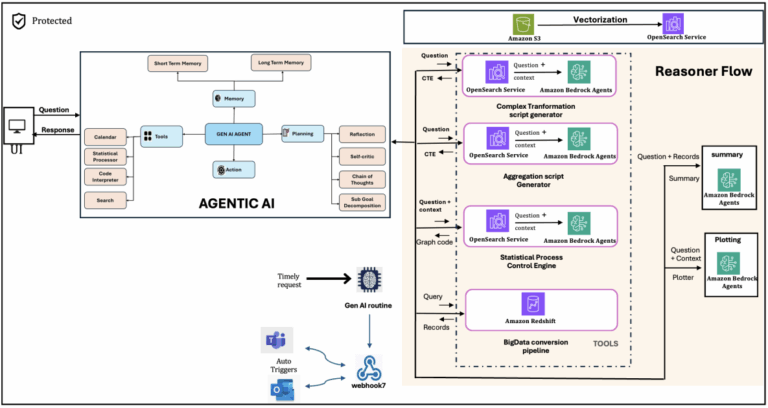
Using a featured RAND AI image for posts helps readers quickly understand the core ideas behind automated research models.
As automated research progresses, practical tools like a chatgpt backlinks builder demonstrate how AI-driven optimization is transforming both scientific discovery and digital marketing.
While early models focused on basic tasks like AI post content automation, advanced systems are now driving breakthroughs in automated scientific research.
Source: RAND