Bill Gates Says AI Could Shake Up Jobs for 20 Years Before Things Get Better
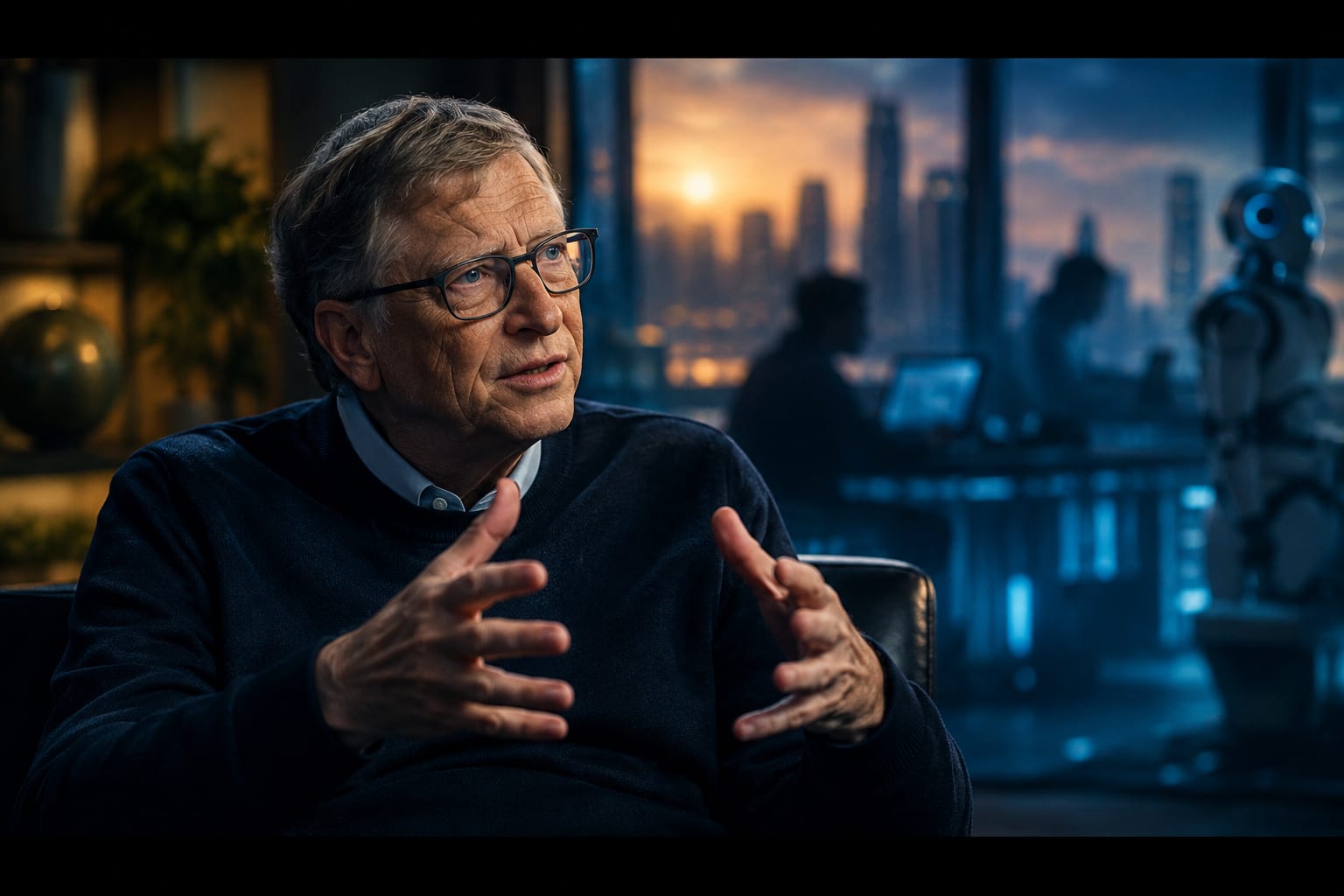
Bill Gates, the Microsoft co-founder, says artificial intelligence could cause big problems for workers over the next 20 years before it finally makes life easier for everyone.
Gates spoke on the "Decoder" podcast. He said the time before AI creates what he calls "true abundance" could be one of the roughest stretches in human history. He warned that some people will come out ahead during this shift, while many others will struggle as AI changes how companies and whole industries work.
AI, if you have not heard the term before, just means computer systems built to do tasks that normally need a human brain, like answering questions or spotting patterns. This site exists to explain stories like this one in plain words, because you should not need a dictionary to follow the news.
Gates thinks office jobs are at real risk. He named phone sales, customer support, and accounting as roles that AI could take over, since computer systems can often do this work faster, cheaper, and with fewer mistakes than people.
He also warned that the danger is not limited to desk jobs. Gates expects humanoid robots to take over physical work too. He pointed to building houses, growing food, and even performing surgery as tasks robots could one day handle, unless AI and robotics development slows down a lot.
Despite these warnings, Gates still believes AI could lead to a future where goods and services are much cheaper and easier to get. But he stressed that the rough transition period comes first, and that is where his concern lies.
Gates also talked about why jobs matter beyond a paycheck. He used his own work fighting malaria as an example. He joked about a future where a machine tells him it can do his job better and sends him off to play pickleball, but said the real version of that would not feel funny at all. He believes work gives people purpose, structure, relationships with coworkers, and a way to solve problems and create things.
Gates floated some ideas to protect jobs. He suggested society might choose to keep certain activities in human hands on purpose, even if AI could do them better. He named art, sports, cooking, and childcare as examples. He also mentioned shorter workweeks and earlier retirement as ways to spread work around if AI lets companies do more with fewer people. He compared this to some Amish communities that choose to limit how much modern technology they use.
Other business leaders are weighing similar ideas. Amazon founder Jeff Bezos and JPMorgan CEO Jamie Dimon have both floated shorter workweeks as a softer alternative to job losses from AI. Tesla and SpaceX chief Elon Musk has called the shift toward an AI economy "bumpy" and suggested government payments to everyone as a possible fix. Musk has also said that in 10 or 20 years, money itself could matter less, though this is his personal prediction, not a fact.
Not everyone agrees on how bad things will get. Dario Amodei, head of AI company Anthropic, has warned the short-term shock from AI could be larger than anything seen before. But OpenAI CEO Sam Altman said in May that AI has not cut office jobs as much as he expected, and he no longer thinks it will cause a massive jobs crisis.
Big layoffs at companies like Amazon and Meta have fueled worry about AI's role in job cuts. Still, the US unemployment rate has not risen sharply during the AI boom so far, so these fears have not yet shown up clearly in the numbers.
What this means for you
Gates is raising a real question: how do you get the benefits of AI without losing your job to it. Nobody has a full answer yet, but here is how you can start preparing.
- Learn where AI is already used in your field, even in small ways.
- Build skills that are harder for AI to copy, like teamwork, judgment, and creativity.
- Keep an eye on how your industry's biggest employers are changing their workforce.
- Stay open to flexible work setups, since shorter hours or new schedules may become more common.
As a next step, take a few minutes to check whether AI tools are already being used in your own workplace or industry. Knowing that now can help you plan ahead instead of being caught off guard later.
Source: Hindustan Times