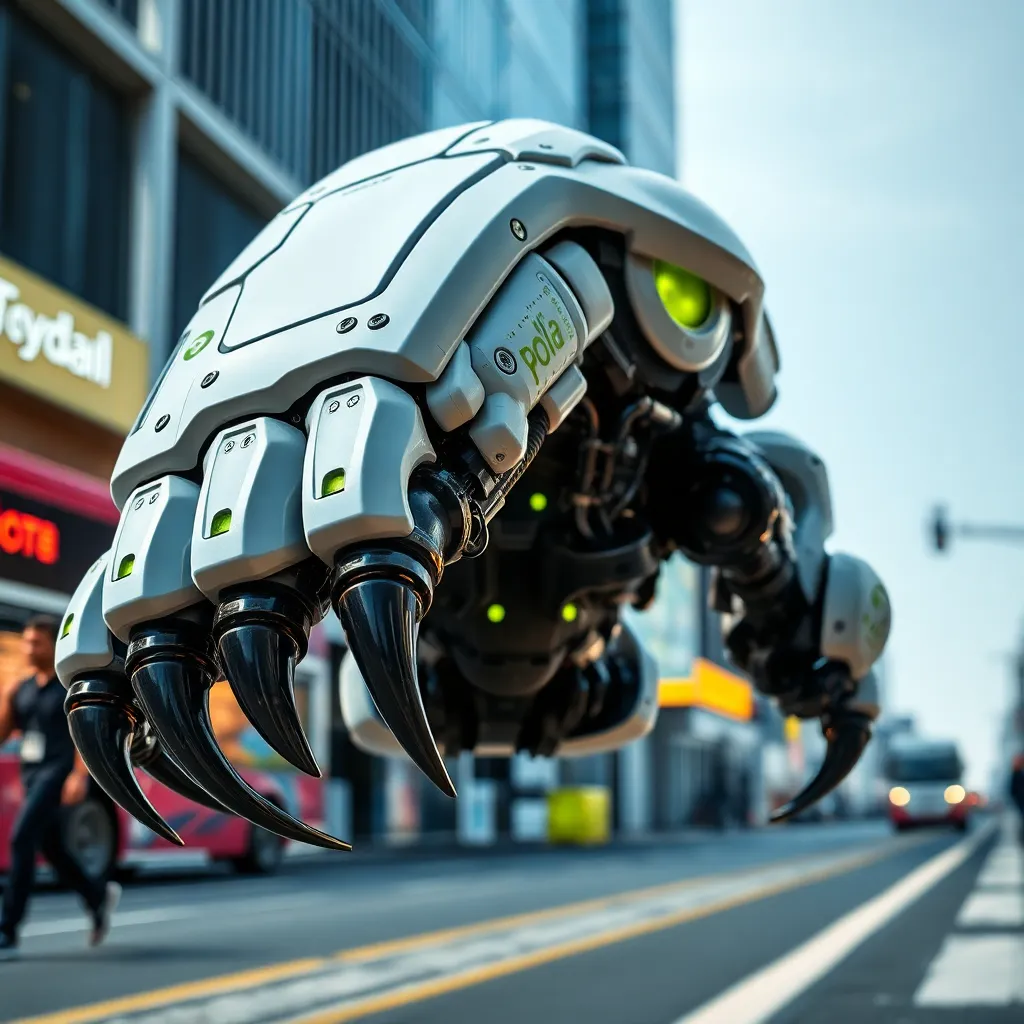
Nvidia GTC: OpenClaw, AI Robotics, and a Trillion-Dollar AI Future
Nvidia’s GTC conference, led by CEO Jensen Huang, unveiled an ambitious future for artificial intelligence, projecting an astonishing $1 trillion in AI chip sales by 2027. This forecast highlights Nvidia’s pivotal role in the AI landscape, positioning it as an indispensable engine for innovation. A central theme was Huang’s declaration that every company needs an “OpenClaw strategy.” While specific technical details were limited, “OpenClaw” can be inferred as a comprehensive framework or ecosystem designed to democratize and accelerate AI development and deployment. This strategy likely emphasizes interoperability, robust software tools, and seamless integration with Nvidia’s powerful AI computing platforms, aiming to simplify complex AI workflows.
The “OpenClaw strategy” appears targeted at enterprises, AI developers, and research institutions seeking to leverage advanced AI capabilities. Its benefits would include faster time-to-market for AI solutions, enhanced efficiency in model training and inference, and access to Nvidia-optimized libraries. This approach aims to solidify Nvidia’s ecosystem dominance, driving demand for its high-performance GPUs and specialized AI chips by making them easier to integrate and utilize across diverse applications, from data centers to edge computing, ultimately expanding the reach of AI innovation.
Further showcasing Nvidia’s real-world AI applications, the conference concluded with a demonstration involving an “Olaf robot.” Despite its “rambling” presentation requiring the microphone to be cut, its inclusion underscores Nvidia’s deep commitment to embodied AI and robotics. This robot likely serves as a proof-of-concept or development platform, demonstrating the application of Nvidia’s AI technologies in physical systems. It targets robotics engineers, researchers, and companies exploring autonomous systems, highlighting Nvidia’s capabilities in areas like perception, navigation, and human-robot interaction. Such a robot would typically rely on Nvidia’s Jetson platform or similar embedded AI solutions, leveraging advanced AI models for perception, decision-making, and control. GTC’s overarching message was clear: Nvidia is building the foundational infrastructure and strategic pathways for the next generation of AI.
Nvidia’s GTC conference showcased how ai automation robotics will transform manufacturing and logistics industries over the next decade.
The integration of ChatGPT automation robotics represents a pivotal shift toward intelligent systems that could define Nvidia’s trillion-dollar AI ecosystem.
(Source: https://techcrunch.com/video/what-happened-at-nvidia-gtc-nemoclaw-robot-olaf-and-a-1-trillion-bet/)