Jensen Huang Steps Down at Nvidia: What It Means for Factories, Robots and AI Plans

Jensen Huang has resigned as President, CEO and board member of Nvidia, the chip company that has become a major force in bringing AI to factories, robots and engineering work.
Nvidia says it has no reason to believe any national security information or company secrets were compromised. The board said Huang's departure followed an independent investigation into reports that he had been targeted by a foreign intelligence effort. News of his exit also came alongside admissions of infidelity. The company's stock briefly lost about $600 billion in value before recovering much of that loss.
This site exists to explain big tech and business news in plain words, for people who are busy but want to actually understand what is going on. You should not need a dictionary to follow a story like this one. So here is what happened, and why it matters if you work in manufacturing, engineering or robotics.
Huang co-founded Nvidia and led it for more than three decades. This is the company's first CEO change ever. The board has named Chief Financial Officer Colette Kress as interim CEO. She will keep her CFO job while also running the company, and the board says it will look at both internal and outside candidates for the permanent role.
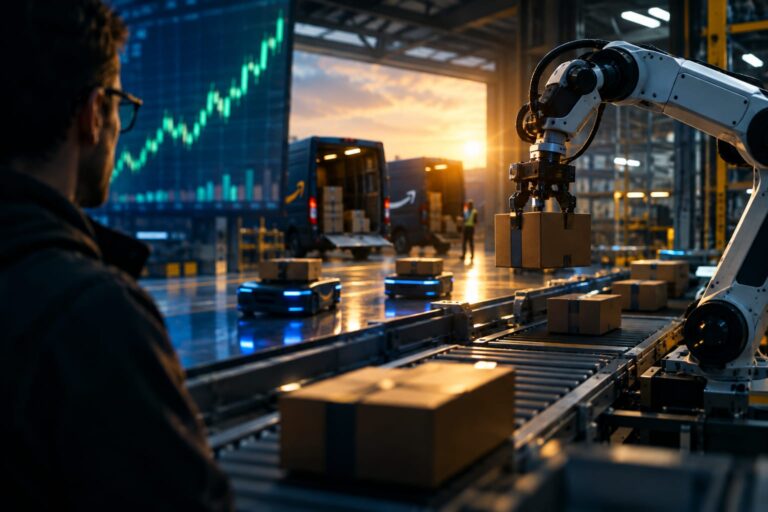
Nvidia is not just a chip maker anymore. It builds hardware, software, simulation tools and development platforms used across manufacturing and robotics. It works with big industrial software companies, automation firms and major manufacturers. Huang was one of the most vocal supporters of this push, often talking about robots, digital twins (computer copies of real machines or factories) and what he called "physical AI."
One major deal shows the scale of this work. In January 2026, Nvidia expanded its partnership with Siemens to build what the two companies called an Industrial AI Operating System. The goal was to use AI across the whole chain of making things, from design to production to supply chains. Siemens committed hundreds of experts and its own hardware and software, while Nvidia supplied AI infrastructure and tools. A Siemens electronics factory in Erlangen, Germany, was picked as the first test site for a fully AI-run factory.
Nvidia also has deals with robotics companies like ABB Robotics, Fanuc, Kuka, Universal Robots and Yaskawa. It works with software firms including PTC, Dassault Systèmes, Cadence and Synopsys. And companies like Honda, Mercedes-Benz, Samsung, TSMC and PepsiCo use its tools in their design and manufacturing work.
What this means for you
If your work touches manufacturing, engineering or robotics, Nvidia's leadership change could matter to you down the road. Here is what to watch and do:
- Know that Nvidia says business will continue as normal. Board chair Harvey C. Jones said the company expects its operations, customer deals and product plans to continue without interruption. Kress said she will keep building on Nvidia's work in computing and AI.
- Notice what was left unsaid. Neither statement mentioned robots, factories or physical AI directly. Nvidia has not announced any change in strategy for these areas, but it also has not given details on future spending there.
- Look at how partners are reacting. Siemens CEO Roland Busch said his company's projects with Nvidia will keep going no matter what happens at the top, and that people are too focused on one person. South Korea's government also asked for and received assurance that Nvidia will still supply up to 260,000 chips for AI computing centers built with Samsung, SK Group, Hyundai Motor Group and Naver Cloud.
- Watch how money gets spent. Reports from Reuters say Kress had pushed back on some of Huang's big spending plans, including financing tied to OpenAI. One project, a planned $250 billion data center deal in Ohio, was reportedly cut down to $120 billion. This suggests Kress may take a more careful approach to large investments, which could affect future industrial AI projects.
Nvidia's next step is public. The company will report its third-quarter results for fiscal 2027 on Nov. 17. That earnings call should give Kress a chance to say more about where the company is headed and whether its industrial AI ambitions will stay as big as before.
Your next step is simple: keep an eye on that November 17 earnings call, since it is likely to be the first real signal of how Nvidia's new leadership plans to handle its commitments to factories, robots and engineering partners.
Source: Engineering.com